
How Nevada Busted Mugshots Begin
Every busted mugshot starts the same way. An agency books someone into local custody and snaps the photo then. The sheriff or police department that made the arrest keeps it. That image marks one moment in a custody process, nothing more. A booking line can sit there before any prosecutor looks at it. The case may be declined, dismissed, or reduced afterward. The court file, not the intake screen, carries that outcome.
Nevada also has no single statewide jail roster. County and city systems each hold their own booking and custody records. The Nevada Department of Corrections, or NDOC, runs a separate offender search. It covers people serving prison sentences. An NDOC photo is a corrections identification image when one exists. It is not necessarily the county booking shot. Someone released from a local jail may never show up in NDOC custody at all.
These labels help keep the record straight:
- Booking
- The intake process after an arrest, when identity, the alleged charge, and custody details are recorded.
- Arraignment
- A first court appearance where a judge addresses the charge and next steps.
- Disposition
- The court's recorded outcome, such as dismissal, acquittal, plea, or sentence.
- Sealing
- A court-ordered limit on access to eligible records. It is not the same as automatic destruction.
What a Nevada Busted Record Shows
A county booking record and a state-prison profile were built for different jobs. What each one shows depends on the custodian. Clark County's current-custody search is one documented county view with several case and detention fields. Other counties may publish far less. Ask a custodian for the record. You might get more than the roster shows. Redaction can trim the fields. A photograph may be withheld or simply not held.
The NDOC form offers demographic, alias, booking, parole, and release categories. A profile can include a photo. The search page does not promise one for every person. That gap matters most in two situations. Someone may have moved from a local jail to state prison. You may also be chasing a released arrestee rather than a sentenced person.
| Record field | What it can show |
|---|---|
| Name and identifiers | Clark's view can show a person's name, age, sex, race, defendant ID, and case number. Confirm identity beyond a name alone. |
| Booking and arrest | A county view may show an arrest date and case or booking reference. The agency that made the intake holds the booking record. |
| Charge and court status | Clark's results can list the booked charge or status, scheduled court action, and case reference. Those entries can change as a case moves through court. |
| Custody and release | Clark can display housing, bail, or a detainer. NDOC data categories include booking, parole, and release information for state corrections records. |
| Photograph | Some interfaces omit public photos. NDOC says a supported browser may be needed to view available inmate photos; availability is not universal. |
The Clark County Detention Center search calls itself a current-custody lookup, and its fields are a Clark-specific example. Other agencies use different portals. Some publish less detail. The Clark County search instructions lay out the official search path and its limits.
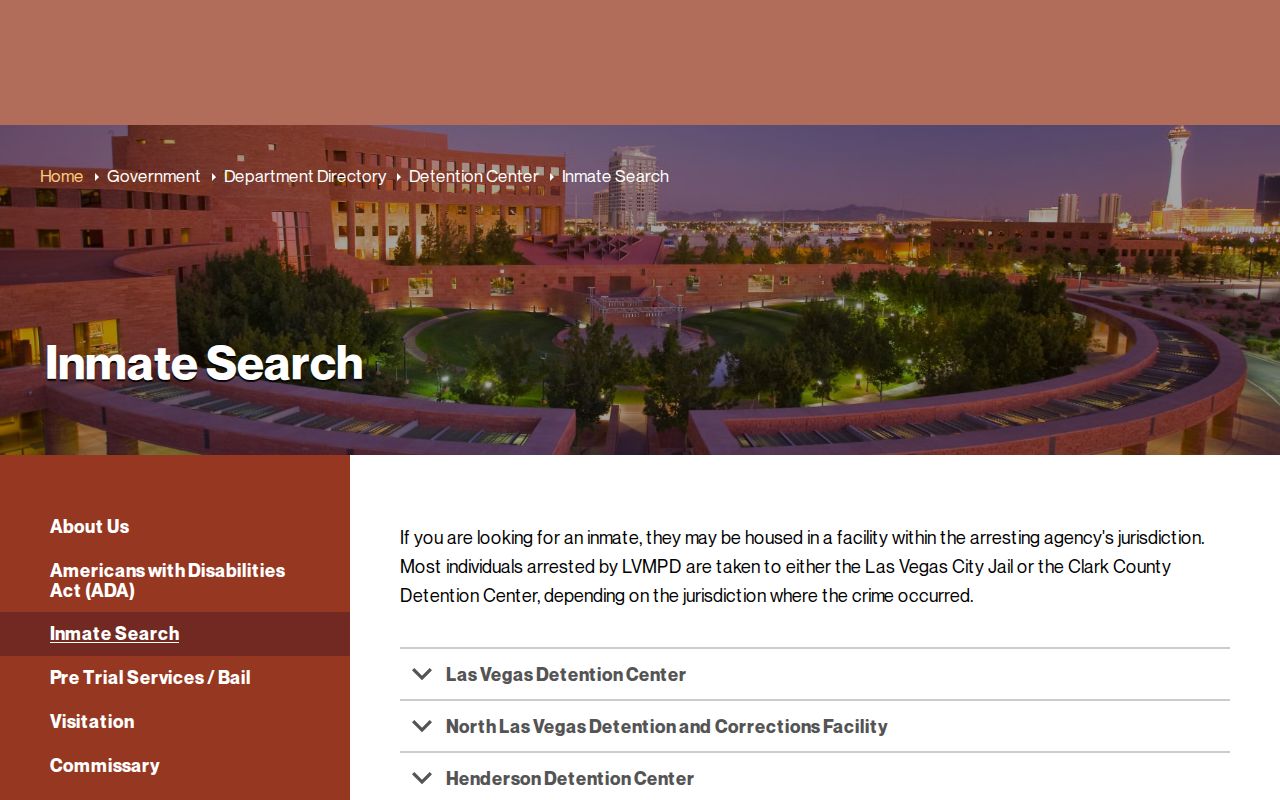
That form is a search interface, not a gallery of booking photos. Use the live county page to confirm the current fields and a result's status. When a roster skips a field, it may still exist in the underlying file. Ask the custodian for the specific record. Ask the court for the disposition. Keep the booking charge, the court charge, and the final outcome as three separate labels. The NDOC Offender Search form lists its name and offender-ID fields. It adds a wildcard note. Its data categories and a photo-viewing notice round out the page.
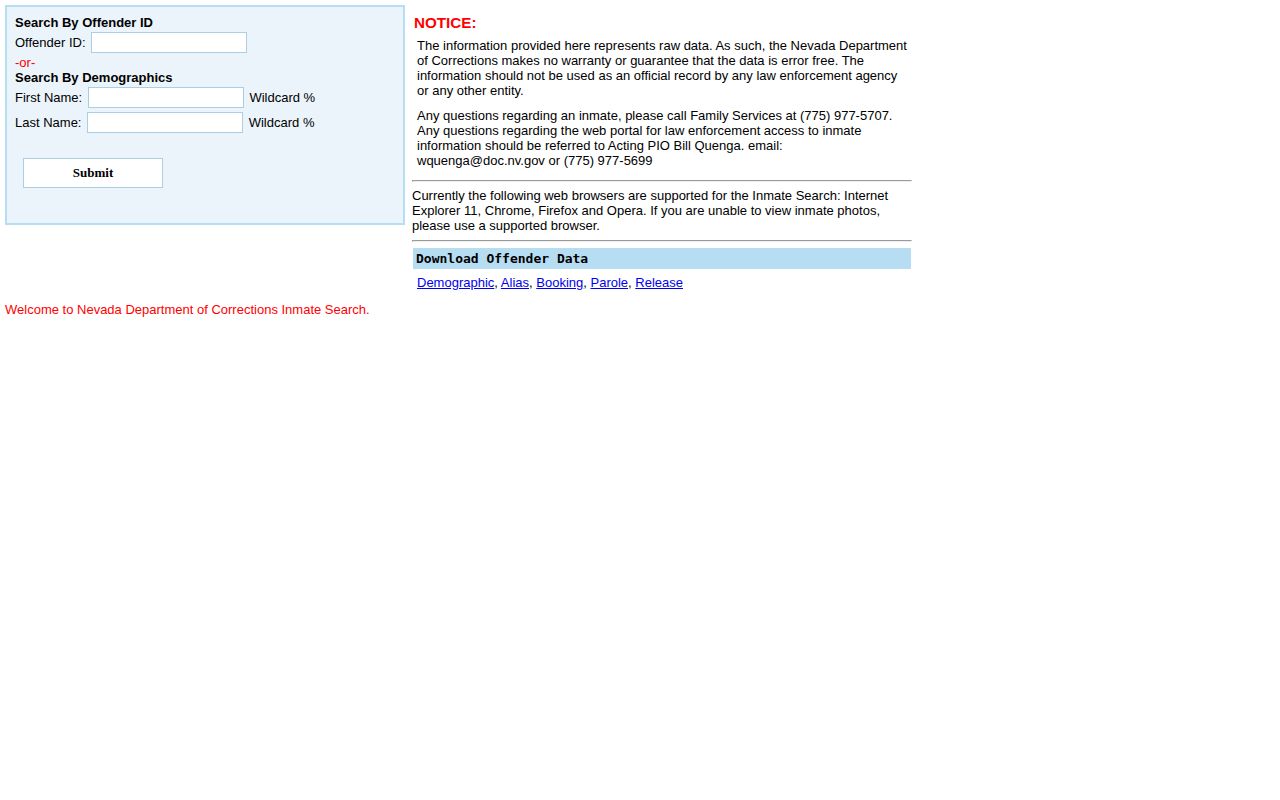
This screen belongs to the state-prison layer only. It does not track every recent arrest or replace a county jail booking file.
How to Request Nevada Busted Records
A person can vanish from a current roster. The agency may still hold the booking record and image under its retention schedule. Send a narrow request to the office that made the arrest or held the person. Nevada Revised Statutes Chapter 239 counts photographs as official records. It sets out an access process, subject to confidentiality rules and other exceptions. Name the record you want. Do not ask a county to build a new statewide list.
Give staff enough detail to find the right file. Ask for the booking record, booking photograph, arrest report, or release record. Give the name and a rough date. The agency may not hold it. If so, NRS 239.0107 calls for a response naming the actual custodian when known. The five-business-day framework covers an initial response or notice, not a guaranteed copy inside five days. Fees vary by record and office. NRS 239.052 generally ties copying charges to actual cost unless another law applies.
- Identify the arresting agency, county, approximate booking date, and facility if known. Add a booking, incident, or court number when available.
- Ask for an existing adult booking record or photograph and name the person. Request that releasable portions be provided if a field must be withheld.
- Use the agency's current form or records portal, then check its fee schedule before agreeing to a cost. Nevada has no single statewide photo fee.
- Keep the written response. If the record is not held, ask which office is the custodian; if it is withheld, note the cited legal basis.
County procedures differ, and some offices expose only a current-custody page. The Nevada County Directory routes to local sites. The sheriff or police records contact is identified there. NDOC runs its own Offender Management Division request path. A county booking image is not an NDOC record unless that department actually holds it. For an NDOC record:
- Check the current NDOC records instructions and identify the record, person, and date range. Include an NDOC number if known.
- Send the request to the Offender Management Division at
omdrecords@doc.nv.gov, or mail it to Nevada Department of Corrections, Attn: Offender Management Division, P.O. Box 7011, Carson City, NV 89702. - Check the current NDOC public-record fee schedule before requesting a copy. Published materials list a general rate of $0.15 per page, actual removable-media costs, and possible extraordinary-resource charges.
Does a missing roster entry mean the agency destroyed the record? No. A live roster is a shifting custody view. A disappearing entry could mean release, transfer, a portal change, a policy call, or a bad search, so ask the custodian about the underlying file.
Nevada Mugshot Law and Photo Access
Nevada has no blanket ban on booking photos. No state statute stops an agency from releasing ordinary adult mugshots. State law also leaves a private publisher's removal fee alone. That silence is not permission for every image, though. Access turns on who holds the record. Purpose, the person's age, safety or investigative concerns, and any sealing order also matter.
Chapter 239 of the statutes tilts toward openness. NRS 239.001 asks for liberal construction favoring public access. NRS 239.010 opens public books and records unless an exception applies. Photographs count as official records under NRS 239.005. That section also covers electronic and visual material. You can therefore request an existing booking image from a public custodian. Nothing in the chapter forces an agency to post photos online. NRS 239.0107 sets the response path. Copying costs fall under NRS 239.052. The current text lives in Nevada Revised Statutes Chapter 239.
Criminal-history rules add a second layer. NRS 179A.070 defines formal records to include arrests, warrants, detentions, charges, and dispositions. Some categories get treated differently. Some records sit apart in the statute. These include juvenile material, certain investigative files, wanted posters, and public court records. Juvenile and protected information can be withheld. A third-party page's format tells you nothing about a person's age or what deserves repeating. NRS Chapter 179A holds the details.
Nevada seals records by court order. No automatic expungement or destruction is promised. NRS 179.245 sets waiting periods keyed to the conviction and its statutory category. NRS 179.255 covers arrests ending in dismissal, declination, or acquittal. NRS 179.275 sends the sealing order to named custodians. NRS 179.285 describes the seal's legal effect. Copies can still linger with a private publisher or a search cache. State guidance comes from the Nevada Records, Communications and Compliance Division.
A booking photo records a single moment in an arrest. The court file holds the rest of the case.
The 2024 Ninth Circuit ruling in Houston v. County of Maricopa came out of another state. It let a due-process claim proceed over public posting before trial. That is not a Nevada statute. It ordered no Nevada agency to pull booking images. Local agencies made their own publication choices afterward. The state's law and due-process context get fuller treatment in the Mugshot Access Laws section.
Retention is not the same as display. Nevada's local-government records manual sets separate minimum periods for jail booking records, registers, current rosters, and inmate case files, with approved schedules governing disposition. A roster can vanish after release. The case file may stay put. An empty search proves nothing about destruction. For older material, ask the originating office or State Archives about the record series.
Note: A court seal directs named custodians to restrict covered records, but it does not refresh every search engine or erase every separate publisher copy.
Find Nevada Busted Mugshots by Record
Start from the custody stage and the booking agency. A fresh local arrest may show up in a county or city current-custody search. Release removes a person from that list. The arrest record itself stays requestable. State prison time belongs in the NDOC locator. Federal prison and immigration detention use their own locators, and none of them replaces the court record.
Follow the official record from the first known agency to the court outcome:
- Pin down the county or city where the arrest likely happened. If the location is unclear, identify the right sheriff or police agency before searching.
- Search the local jail's current-custody portal or official app by name or the fields that system accepts. Note its update window and whether it shows public photos.
- If the person is no longer in local custody, ask the arresting or detaining agency for the existing booking record, photo, or release record under NRS Chapter 239.
- If the person is serving a Nevada state-prison sentence, search NDOC by offender ID or name and confirm the profile details.
- Find the court named in the citation, release paper, complaint, or docket. Check that court's portal or ask its clerk for the disposition.
- For federal prison or immigration custody, use the BOP or ICE locator. Those records cover federal or immigration stages, not a local booking photo.
A name match is only a start. Check the booking date, court or agency number, age, and other details the official result makes available. Search tools are starting points, not certified identity records. When a portal's result seems unclear, ask the custodian which record and custody period it covers.
Note: Save the official page and the date checked, since local rosters, app features, and agency publication policies can change.
Nevada Busted Roster Search Fields
County portals share no single design or photo rule. Clark County's current-custody search takes at least two letters of a last name, an inmate ID, or a Justice Court case number. The view covers current CCDC custody. It shows no public booking photo. People under 18 and those in protective custody are excluded. Las Vegas, Henderson, and North Las Vegas run separate current-custody searches with different fields, and their views show no public photos either.
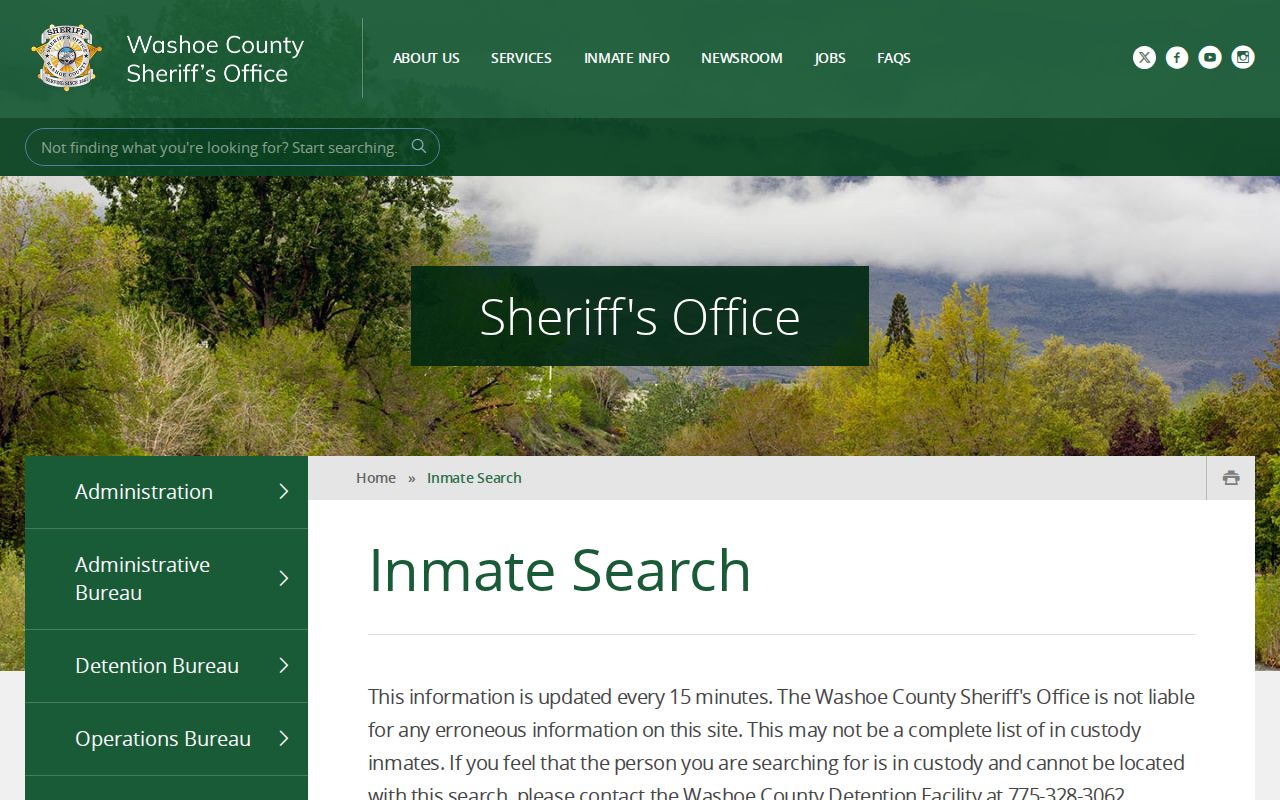
Washoe County asks for at least three surname letters. Its list updates every 15 minutes. A detention fallback number appears on the live page. The search covers current custody, not the county's full arrest history. It is not a record of every arrest. Washoe's notice says public mugshots and personal identifiers are no longer available, citing privacy and due-process concerns. Clark and Washoe are the major visible routes. Neither is a statewide archive.
The official portals differ on fields, time windows, and images:
| Official system | Search field or route | Scope and photo status |
|---|---|---|
| Clark County CCDC | Last name (two or more letters), inmate ID, or Justice Court case number. | Current CCDC custody, updated periodically. Reviewed public results did not show photos. |
| Washoe County Sheriff | At least three letters of a surname. | Current custody; the site states 15-minute updates and says public photos are unavailable. |
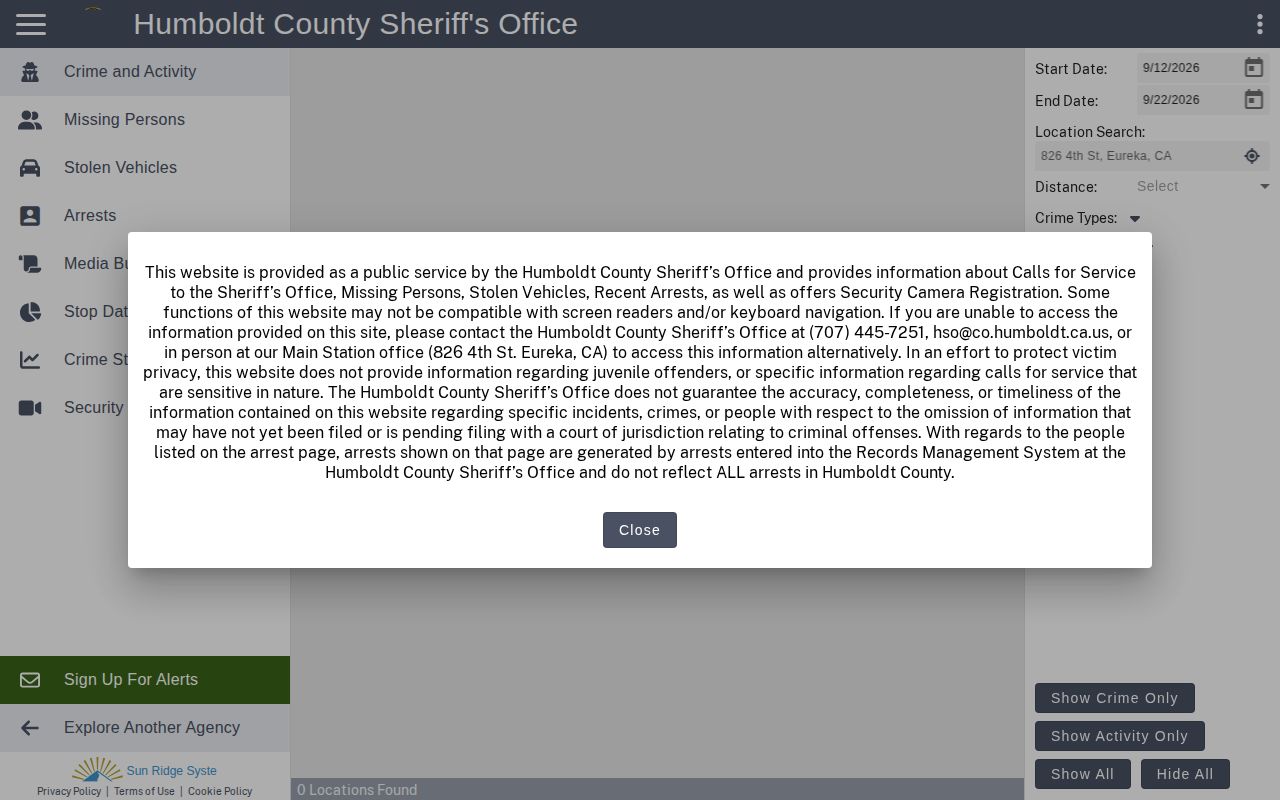
| Humboldt County Sheriff | Official CitizenRIMS inmate and arrest routes. | Legacy tools showed short date choices, but current fields and photo controls were not confirmed. |
| Lander County Sheriff | CitizenRIMS incarcerated-person and arrest searches. | Public configuration had inmate and arrest photo display disabled. |
| Carson City Sheriff | The county entry redirected to a Power BI custody report; Detention also linked a Tyler search. | Photo, fixed update cadence, and historical archive were not confirmed. |
Match your search to where the arrest happened and which facility held the person. City arrests can land in a county jail. Some cities run their own lookup instead. Read whatever instructions come with a result, jot down the date, and fall back to a formal records request when the portal falls short. Washoe County's roster page displays a surname search, a refresh statement, and a photo notice for one agency's current-custody view. Those controls belong to Washoe alone. No other Nevada county has to copy them. The same official page spells out the surname-search minimum, the update cadence, and its limit on public photos.
A roster tracks who is in custody now. It does not archive people already released. The Humboldt County inmate portal opens the sheriff's CitizenRIMS search. Older documentation described a richer lookup. Booking number and date, agency, arrest location, status, charge, and bail all appeared there, sometimes with photo links. Whether the live interface still offers those fields is worth confirming on the official CitizenRIMS page before relying on them. The current screen may show fewer controls.
Lander County's incarcerated-person search is an official route into CitizenRIMS. Its public photo display is switched off. That setting keeps faces out of the web results. So the same Lander portal cannot support any claim of published booking images. The search path itself still works. Exact result fields and the photo setting deserve a quick look on the live page.
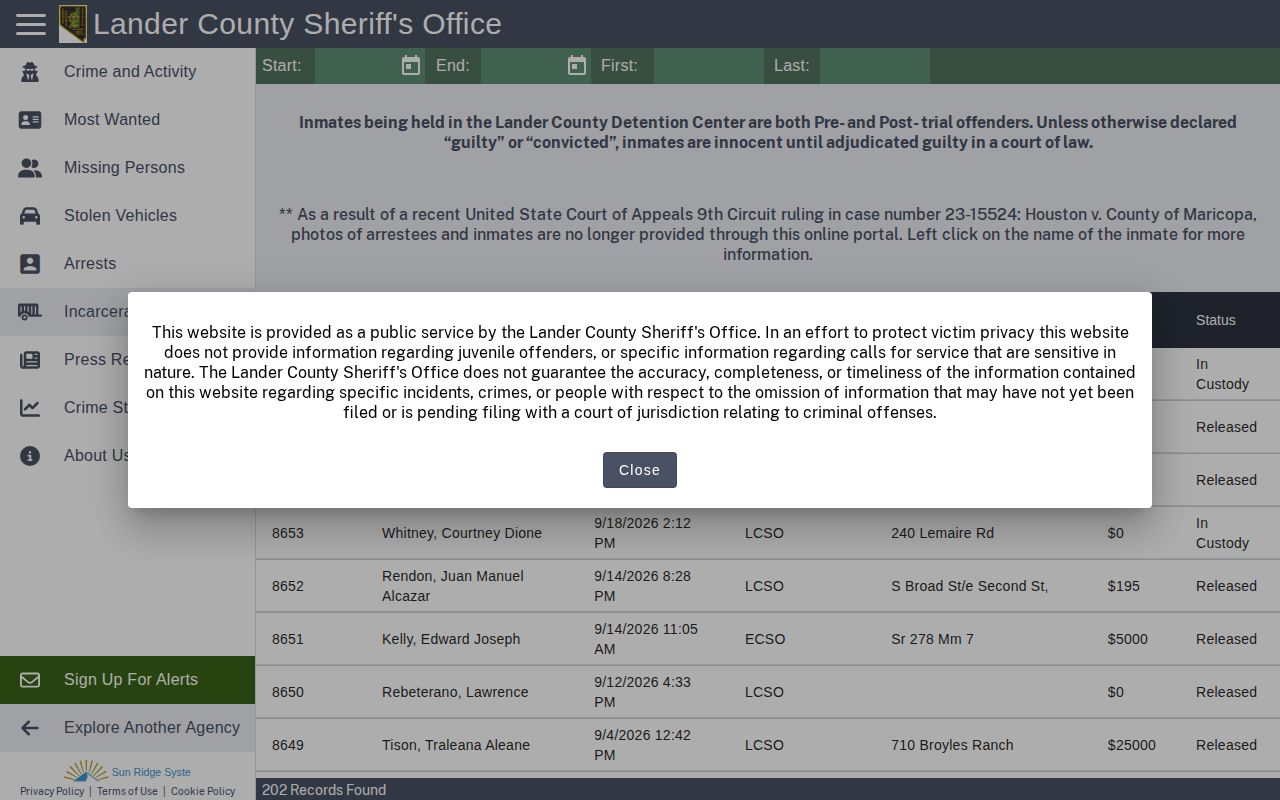
A working search page does not guarantee a photograph. Lander hides inmate and arrest photos from public view. Clark County's search instructions describe a custody list refreshed periodically through the day. That helps locate someone still held. It is not a dated arrest archive, though, and it promises no photo for each entry. Plenty of Nevada agencies have stopped displaying faces in public roster views. The booking record still exists. Ask the agency whether a specific photograph can be released, and what rule applies.
Recent Arrest Feed Windows in Nevada
"Recent" means different things across Nevada. Washoe refreshes its current-custody roster every 15 minutes. The sheriff still warns the list may not be complete. Clark updates periodically through the day. It names no fixed interval. Humboldt's legacy vendor offered views covering the last two or three days. Those controls deserve a fresh check before anyone treats them as current.
Most counties publish no named same-day, 24-hour, 48-hour, 72-hour, or weekly arrest feed. A newspaper's weekly booking recap follows the paper's schedule, and a third party's 30-day label belongs to that publisher too. Neither one is the sheriff's feed. A name aged off a list proves nothing.
Churchill, Esmeralda, Eureka, Lincoln, Mineral, Pershing, Storey, and White Pine list no current public roster or photo feed. Douglas points people to its app while promising a web inmate list soon. Elko and Nye reported roster or app outages during a system migration. An outage differs from a missing roster. A missing roster differs from an app-directed page. Neither equals an empty jail.
The urban-rural split is about tools, not bookings. Clark, Washoe, and Las Vegas-area agencies run visible current-custody searches. Rural counties lean on the sheriff's office, a vendor page, a phone call, an app, or a records request. Humboldt and Lander show a small county can field a structured portal. Lander just hides the faces. Check the agency's page the day you search.
Churchill's best recurring view is a weekly newspaper report. It covers a stated window of dates, not the present hour. It is no live feed. A weekly article cannot say who sits in custody today. Where a county posts no roster, its records unit and the courts are the route. A missing page proves nothing.
Note: Only a few official systems publish a defined window; aggregator labels and news recaps must remain attributed to their own publishers.
Nevada Booking Apps and Alerts
Churchill, Douglas, Lyon, Pershing, and Washoe all offer an app or an app-directed path for jail information. These tools deliver agency news or custody notices. They fall short of full arrest feeds unless the agency's current listing says otherwise.
Douglas sends visitors to its app. Its web inmate list is still marked coming soon. Lyon also leans on an app and has moved some routine booking coverage toward aggregate statistics. Churchill's app bundles jail information with an inmate search but no photo feed. Elko and Nye report app migration or availability problems.
Nevada's statewide custody alerts moved from VINE to S.A.V.E. in August 2025. The Nevada Department of Corrections' S.A.V.E. victim-notification page is the official starting point. S.A.V.E. sends custody notices. It is not a mugshot source, charge history, or court docket. The Attorney General's 2025 announcement describes the switch.
Before installing a county app, follow a link from the sheriff and check what it currently does. An old store listing means little. The agency's present notice wins.
Does S.A.V.E. show booking photographs? No. It sends custody alerts. Photos and court outcomes live elsewhere, so treat this route as a notification service rather than a search tool.
Nevada Court Records After Booking
Nevada runs no single court portal covering every trial, justice, and municipal case. Appellate search tools from the Nevada Supreme Court and Court of Appeals exist. Lower-court files stay with each court. The state AOC's case-search explanation spells out those limits. The Appellate Courts Public Portal is not a statewide jail roster.
Start with the paperwork. The official case number names the court that holds the file. A charge at intake can be amended or never filed. Search the court's own portal or ask its clerk. Note the disposition and date separately. The Nevada Supreme Court's public case search warns that online information may not be official. Sealed or lower-court material may not appear.
Each record answers a different question. An arrest record names the processing agency. A custody result shows who may be held now. A docket tracks later case events. News stories can predate the outcome. A missing online docket does not mean charges were dropped. The court or its clerk remains the source for a plea, dismissal, acquittal, or sentence.
Nevada Busted Mugshots by Channel
Start with official tools. Pick the one that covers the right custody stage. Third-party pages and local news can help you spot a date or agency, but they stay secondary. They may omit a release, reuse an old image, or miss a court disposition. Their presence never confirms custody. The table compares both the holder of the record and the stage it covers.
| Channel | Record stage | Photo and source status | How to use it |
|---|---|---|---|
| County or city roster | Often current local custody, not every arrest. | Official; public photos vary and are absent in several checked portals. | Choose the arresting county or city and follow its search instructions. |
| Agency records request | Existing booking, arrest, intake, or release records. | Official; a photo may be withheld, absent, or subject to an exception. | Name the custodian, person, date, and specific record under NRS Chapter 239. |
| NDOC Offender Search | State-prison custody and related offender data. | Official; a profile photo may be available, but not for every result. | Search by NDOC ID or name and verify profile details. |
| Nevada court portals | Case filings and later dispositions. | Official; not a booking-photo roster, and some records are not online. | Use the court named in the paperwork or ask its clerk. |
| BOP and ICE locators | Federal prison or immigration detention. | Official custody paths; not Nevada county photo feeds. | Use only for the federal or immigration stage that the locator covers. |
| Local news reports | Selected incidents and later reporting. | Editorial sources; an image may be an agency, court, surveillance, or illustrative photo. | Read the article for its named source, then verify with the agency and court. |
| Third-party arrest pages | Copied arrest information on a separate schedule. | Unofficial and potentially stale; a photo does not prove current custody. | Use only as a lead, then verify directly with the official record holder. |
News helps you find reporting. It does not answer current custody questions. In the south, the Las Vegas Review-Journal Crime, 8 News Now Local, FOX5 Vegas Crime, and KTNV Crime cover southern Nevada. The north relies on KOLO 8 Crime, 2 News Nevada Local, and This Is Reno Courts & Crime. For local or historical reporting, try the Nevada Appeal, Carson Now, The Fallon Post, Ely Times, and Pahrump Valley Times.
Treat these as leads. Stories may pair with agency, court, surveillance, or purely illustrative images. A news photo is not always a booking photo. These outlets are not official daily arrest feeds. Official records remain the source of truth, because secondary state indexes cover counties unevenly, carry old custody labels, and miss later court outcomes.
The BustedNewspaper Nevada directory fits here. It is a secondary state coverage index, not a government roster.
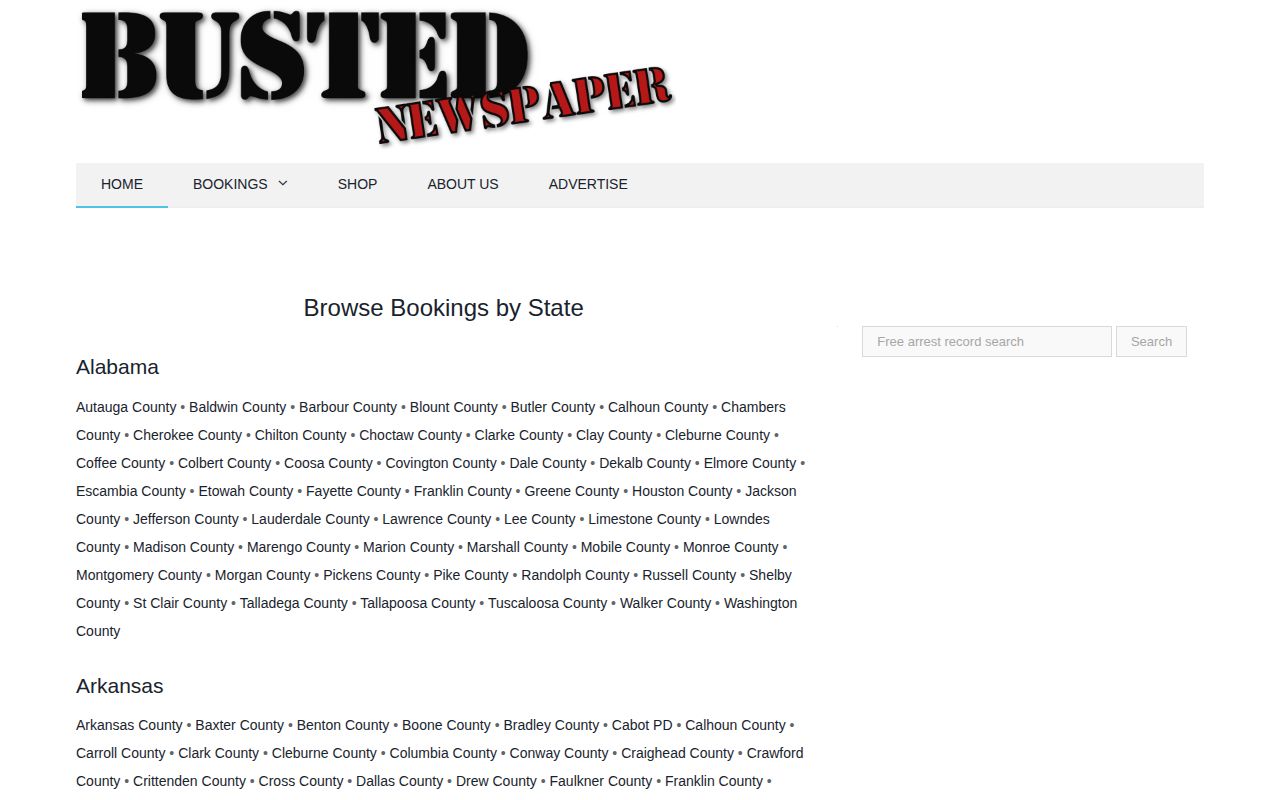
Coverage differs by county, and an entry may miss current custody or a later court result.
RecentlyBooked's Nevada page sorts its coverage paths by locality. It sets its own window for recent arrests.
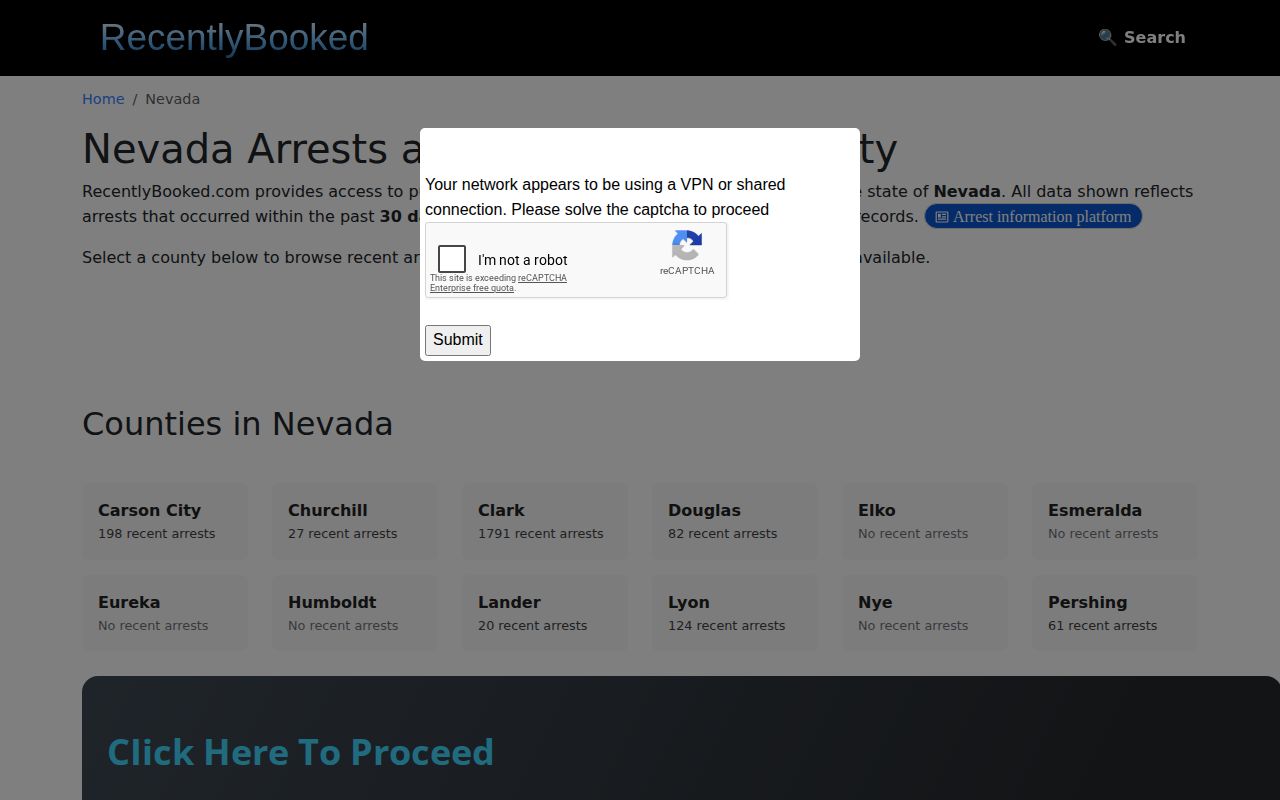
This one is a publisher's state index. Use it as a lead only. Verify release or transfer status with the official custodian.
The Mugshots.com Nevada category page is just navigation with older locality paths, not a live jail search.
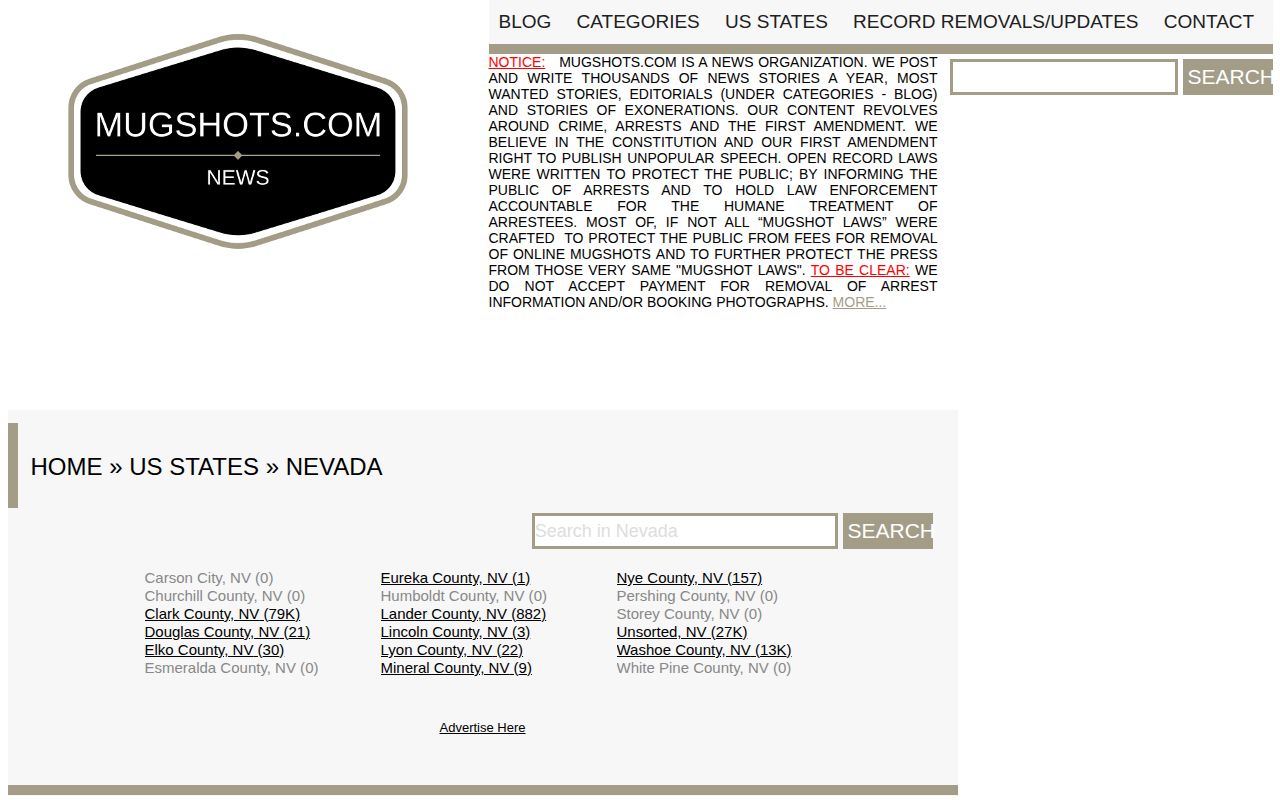
Older Nevada records can carry custody labels that went stale years ago. Check with the agency directly. The court's disposition settles the question.
Third-party channels are popular but imperfect. Arrests.org's Nevada search offers filters, yet its own disclaimer admits the records and images may be wrong or incomplete. Mugshots.zone's Nevada entry is a general state route. Confirm an exact county page exists first. Treat it as broad state coverage rather than local reporting.
Some publishers offer free correction or removal routes. Those are private policies, not Nevada law. Eligibility hinges on each publisher's current terms and whatever documentation you supply. None promises a result for every accurate entry. The statewide law page walks through verifying an official correction or seal. Then a no-fee request can go to any publisher that copied the record.
No automatic correction rule covers every news outlet. Ask through the outlet's current editorial contact, attaching a disposition, sealing order, or source correction when one applies. Demanding money for removal deserves caution. A private payment never substitutes for an official correction or court order. The Bureau of Prisons Inmate Locator is a separate, official federal search for a different custody layer.
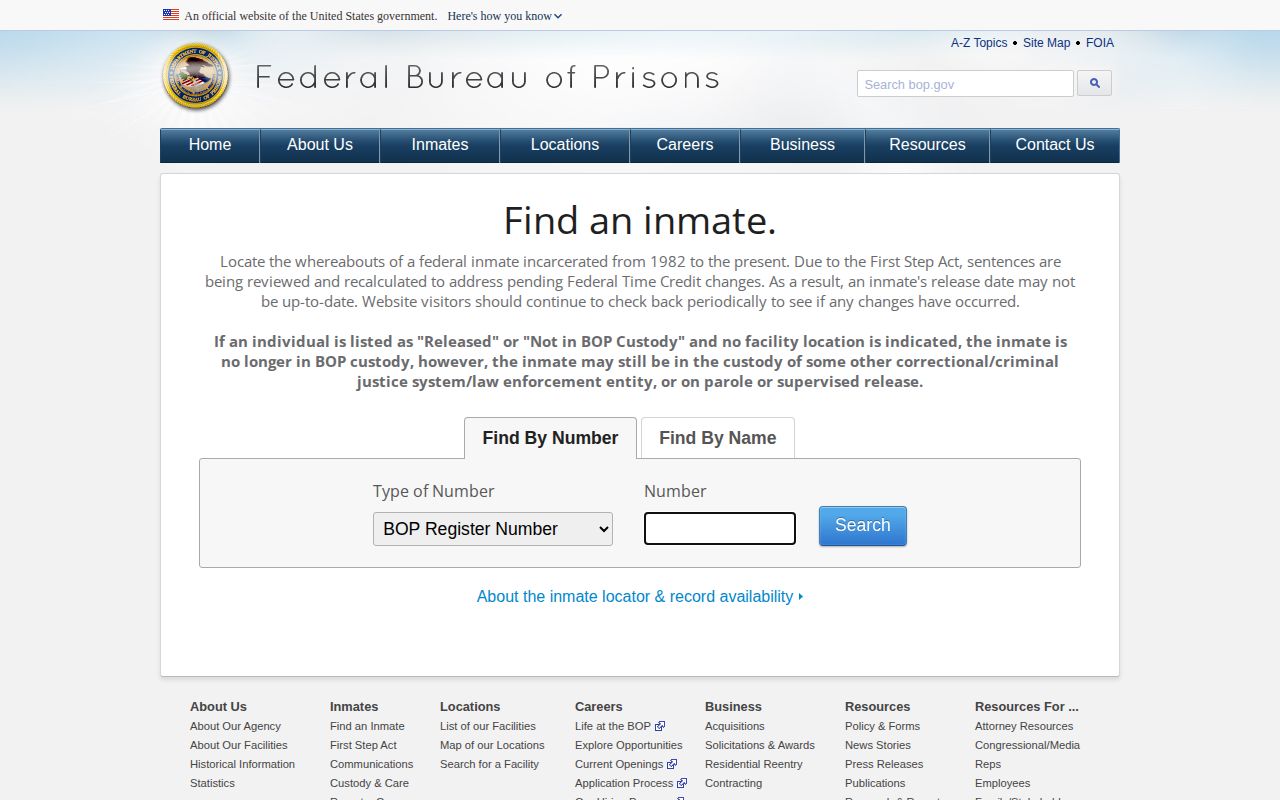
That federal form shows no county booking photo. A local arrest and a federal sentence remain two distinct records.
Note: These news and publisher pages are leads only; verify the source record, current custody, and any disposition with the responsible office or court.
Where Nevada Booking Photos Go
A county roster usually lists only people in custody now. Names drop off after release. The booking record itself stays with the agency. A state-prison sentence creates a separate NDOC profile, while federal and immigration custody run through other systems. No photo may appear in any public view. For immigration holds, the ICE Online Detainee Locator sits apart from county rosters and may not confirm someone transferred or released.
Nevada Wanted Lists and Warrant Checks
The Nevada State Police Most Wanted page serves public safety. It is not a statewide warrant database. County tools vary widely. Elko posts a photo-bearing wanted list, Humboldt splits warrants from most-wanted routes, and Lander's portal leaves public photos disabled. A notice can stay indexed long after a status change.
A wanted page wants your tips. A warrant check is different; it asks whether a court or agency holds a current warrant. A blank list or third-party page cannot answer that. Confirm with the issuing court or agency. Never approach anyone shown; send tips to law enforcement, or call 911 for an immediate threat, and see a lawyer or the court through lawful channels if the warrant concerns you.