
Are Nevada Busted Mugshots Public?
Nevada law does not force agencies to publish booking photos statewide. No statute targets ordinary mugshot publication. None regulates the pay-to-remove fees private sites charge, either. That gap does not make every photo public. Nor must an agency post one, and no private publisher can be ordered to delete its copy. Each request still turns on the custodian, the record type, protected information, and any court order in force.
The main rule is the Nevada Public Records Act, NRS Chapter 239. A photo held by a government agency fits the broad definition of an official record. A granted request is not a posting requirement. The agency may review legal limits first. It may redact protected parts or point you to the office that actually holds the file. A private copy follows its own policy. It may not match the agency's current record.
A booking photo documents an arrest and intake. It marks one event in a longer process. The court file holds the outcome.
What NRS 239 Makes Public
Nevada's public records law opens with a broad promise. NRS 239.001 declares that public access should be prompt, and courts are told to read the law liberally. Photographs are records too. NRS 239.005 defines an official state record. The definition reaches photos plus electronic, audio, visual, and machine-readable material. Then NRS 239.010 opens the public books and records of any government entity. A confidentiality rule or another listed exception still blocks release. A booking photo held by a Nevada agency therefore fits a records request squarely. The statute does not force agencies to post images online, though. The guarantee is release on request, not a public web page.
The clock matters as well. NRS 239.0107 sets a deadline. Action must come by the end of the fifth business day after a request arrives. The agency must permit inspection or copying, or provide a copy. If it lacks the record, it must identify the actual custodian. It can also send written notice that the item is not yet available, along with the earliest reasonable date and time. That first reply is rarely the end of the story. The office may ask for clarification or weigh legal limits. It may redact details, or explain that it never maintained the item at all.
Fees and disputes have their own sections. NRS 239.052 ties copy charges to actual cost. A different statute may set a different figure. Ask the agency for its current schedule and a narrow estimate. Do not assume one statewide photo price. NRS 239.011 offers a court route. It applies when a record is unlawfully withheld or delayed. A judge ordering a specific image released is never a sure thing. Read the current text of NRS Chapter 239 before relying on any rule or filing a challenge. The full chapter page, published by the Nevada Legislature, displays every public-record section in context.
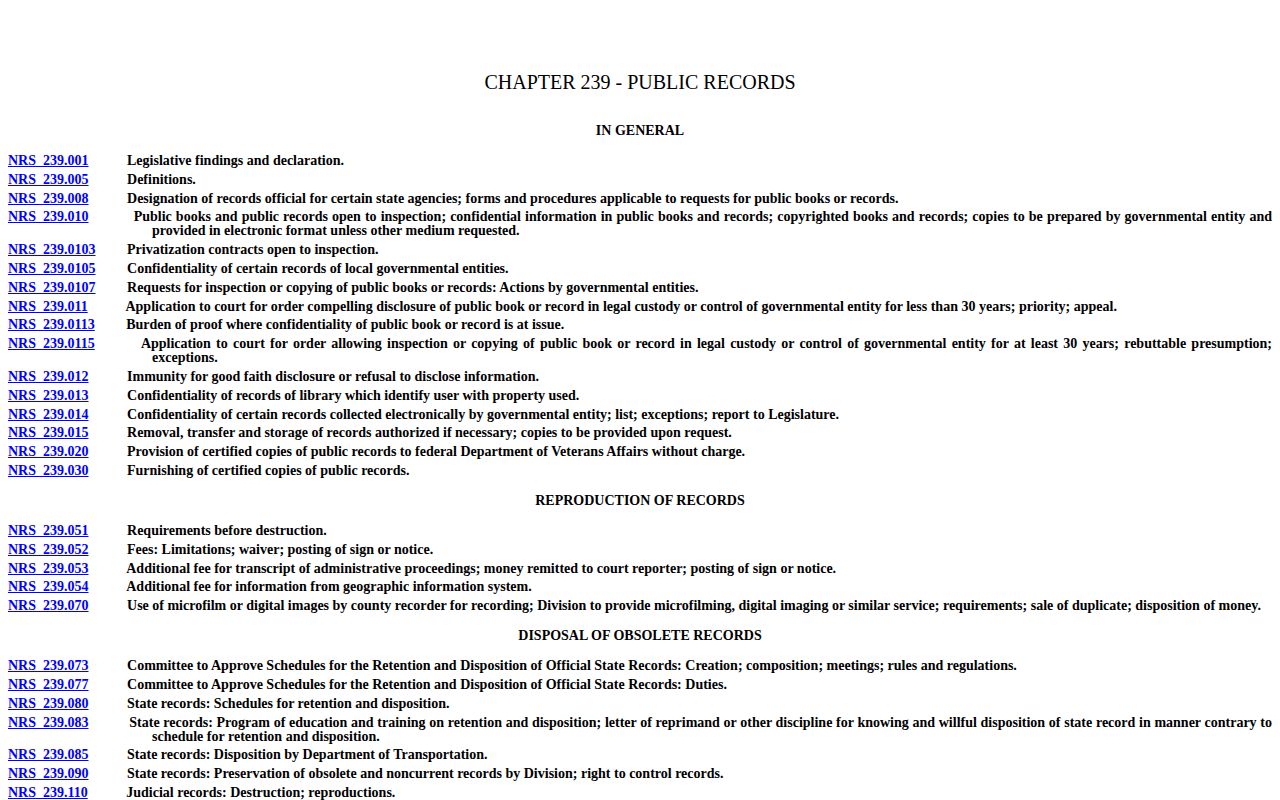
NRS 239 opens records for inspection. But that promise has limits. An agency may let you view a record. Yet it may decline to post that record in a searchable online roster. Some files get withheld entirely. Others come back with sections blacked out under a specific exemption. So if a booking photo is missing from a website, that alone proves nothing. The picture may exist even though no one published it.
Busted Mugshots vs Criminal-History Files
NRS Chapter 179A draws the line between these worlds. A criminal-history record, as defined in NRS 179A.070, covers formal events. Arrests, warrants, detentions, charges, and case dispositions all count. Identifying details ride along. The statute also carves out material that sits outside that definition. Investigative files, juvenile information, wanted posters, original chronological entries, and public court indexes get separate treatment. Each can trace back to one arrest. None is the same file.
A booking photo can land in more than one kind of place. It may sit with a local agency. Or it may live inside a criminal-history file or another record set. Where it lives decides how you ask. NRS 179A.150 sets an inspection right. A person who believes a file holds their criminal-history information can review it. The review happens at the Central Repository or at a local, municipal, county, or metropolitan police agency. The same law provides a path to challenge accuracy. NRS 179A.160 opens a second door after a favorable outcome. An acquittal, dismissal, or another qualifying disposition must become final first. Then a written application goes to the Central Repository and the agency holding the record.
That correction route has limits. It reaches the files agencies search when answering criminal-history inquiries. The statute still attaches conditions and exceptions. It is not a blanket order to erase copies. Publishers, news archives, and search engines keep what they hold. A photo on an unofficial page is not a current government record. For state corrections rather than county booking history, see the NDOC offender-search layer.
Why Nevada Booking Photos Vary
No Nevada law forces every county jail to display photos the same way. Local practice runs all over the map. Some agencies publish a current-custody search with images. Others put the roster in an app. Some show booking data with no pictures at all. Several systems in the Las Vegas area and in Washoe County display no public booking photos. A few counties post no online photo policy. Vendor tools and interface redesigns also shift what appears.
Court rulings add another layer. In Houston v. County of Maricopa, the Ninth Circuit weighed a claim that arrestee photos and identifying details were posted publicly before adjudication. On September 5, 2024, the court held that the complaint plausibly alleged a substantive due-process theory built on public humiliation and reputational harm. That appeals court covers Nevada. Still, the opinion is not a Nevada statute. It ordered no universal removal of booking photos from agencies or publishers.
Counties have since made their own choices. Douglas County shut off public inmate-search mugshots. Lander's portal configuration disables photos. Lyon moved some recurring booking coverage toward statistics. Washoe's inmate search states that public mugshots and other personal identifiers are no longer available there. Those are publication choices, not one shared policy. They also do not prove the original images never existed. The official Washoe search page states its current photo limit on its own interface.
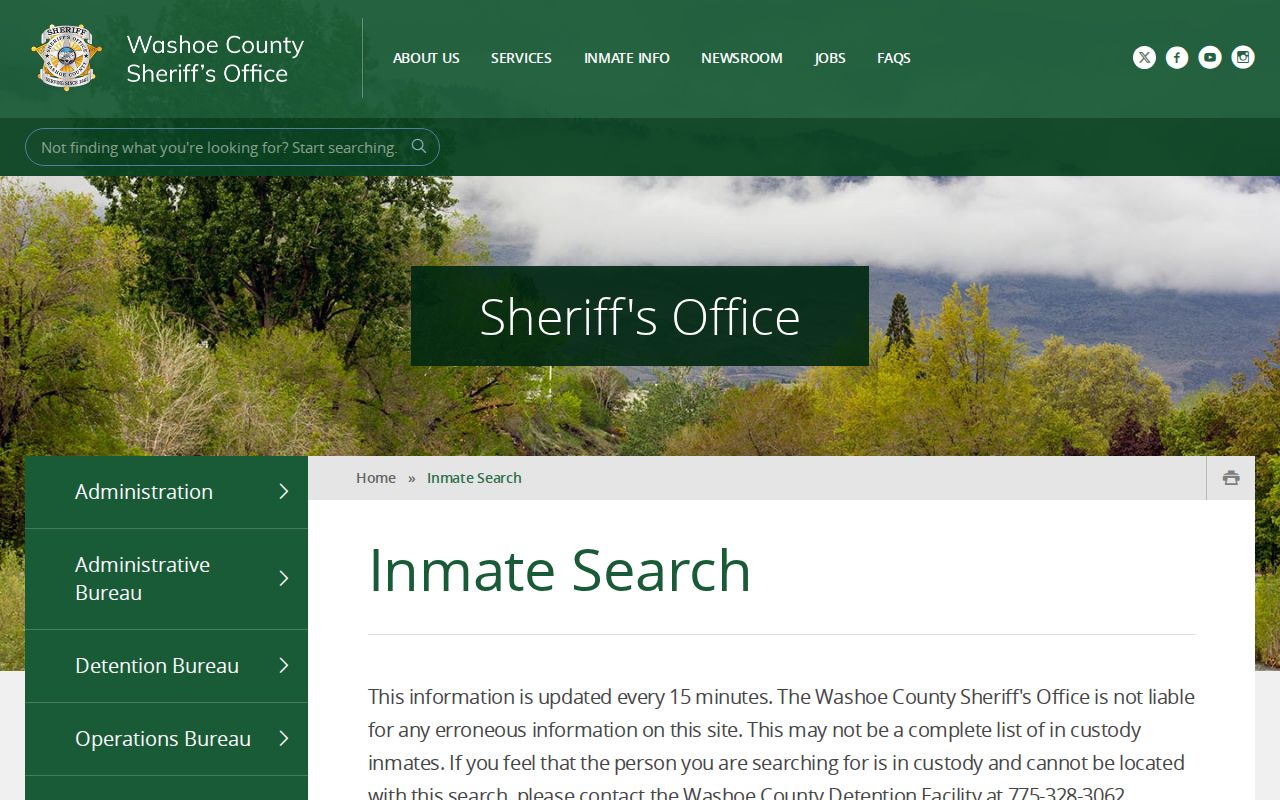
The Ninth Circuit opinion supplies legal context, not a Nevada legislative choice. Agency rules still govern. So does the makeup of an individual record. Check the agency page for what is displayed online today, and use a Chapter 239 request for a specific existing record that is not posted.
Juvenile and Protected Nevada Records
Juvenile records get special protection in Nevada. The state's criminal-history definition treats juvenile information separately. NRS 239.010 also lists juvenile confidentiality among its limits on public access. The state local-government records manual separates juvenile arrest reports, photographs, and booking files. They form their own record series. Its schedule calls for permanent retention. Sealing can come at age 24 or earlier by court order. Retention does not make the file public.
Never repeat a juvenile name or photo from an adult-style roster or an aggregator. Layout proves nothing. A third-party page cannot show that a person is an adult. Nor can it show the information was released lawfully. Ask the responsible agency or court which access rule applies. The same caution covers victim identities, protected addresses, and safety-related details. Sealed records count. So does material tied to an active investigation. A request lets an agency weigh what it can release. It is not a direction to publish an unredacted packet.
Retention and web display run on different clocks. NRS 239.080 requires official records to follow approved retention and disposition schedules. Records with archival value can pass to the State Archives. A live roster drops a person after release, while the jail file keeps its schedule. A vendor may age out a row long before retention ends. "Not online," "withheld," and "destroyed under a schedule" mean three different things.
How to Request a Nevada Mugshot
Keep the request narrow so the custodian can actually find the file. Give the person's name. Add the arrest or booking date you believe applies. Include the arresting agency or the holding jail when that is known. A booking or incident number helps too. Say exactly what you want. That might be a booking photo, a booking record, an arrest report, or a release record. The office may not hold the item. If so, ask it to point you to the right custodian. You can also request any portions that can be separated from protected material.
- Start with the agency that made the arrest or holds the booking record. Do not assume a state office has every county image.
- Give the name, date range, location, and record number if known. Use the narrowest useful time range.
- Ask for inspection or a copy of the existing record, and request the current fee estimate.
- If the record is withheld or redacted, keep the written reason and any cited law with the response.
- If the office is not the custodian, ask where the request should go and send a new request there.
Nevada agencies work under a five-business-day framework. That clock sets the first response, not the final delivery. An agency may send a copy, offer inspection, refer you to another custodian, or state the earliest reasonable time for later production. Some requests need clarification or review. Fees, forms, redactions, and delivery options all live on the responsible agency's current public-records page.
A stale search result is a different problem. A roster can change or a court record can be updated while an old result keeps appearing in a search engine. Google's outdated content guidance lets a user request a refresh once the source page has changed. That request only affects the search result. It does not delete a separate publisher's page or an agency's retained record. Fix the source first, then contact anyone else holding a copy.
When a Busted Mugshot Can Be Sealed
Nevada relies on sealing rather than a broad automatic expungement rule. A seal limits access by court order. The file still exists somewhere. NRS 179.245 governs records after conviction, with offense-specific eligibility rules and waiting periods. The right period depends on the final judgment and the statutory category. A charge label on a booking page is not enough to go by. Use the current law and the court's case record. Do not guess from an arrest entry.
A separate path exists under NRS 179.255. It covers certain cases ending in dismissal, a decision not to prosecute, or acquittal. Those carry their own timing and exceptions. Even a favorable outcome does not send an order to every custodian on its own. The Nevada Records, Communications and Compliance Division's sealing guidance walks through the state process. Current paperwork sits on the Nevada courts forms page. The court that handled the case still matters, along with its filing instructions.
Under NRS 179.275, the order goes to the Central Repository. It also reaches every custodian named in it. NRS 179.285 describes what a completed seal means, subject to statutory exceptions. The order binds each named custodian's records. It does not wipe every image copied to a private page or a newspaper archive. A cache or search index can keep a copy too. Those holders may each need notice. They may also ask for documentation under their own process.
The sensible sequence for correcting the public record runs this way. Confirm the final court outcome first. Use the proper sealing or correction route. Notify the original agency, then contact other publishers holding copies. Do not count on instant or universal disappearance. An old result can linger after the official source has already changed.
Free Opt-Outs for Busted Mugshots
Official sources come first. Confirm the court outcome or sealing order. Then ask the agency that holds the record to correct it. Keep a copy of the response. Third-party sites run on their own schedule. They may copy information late, omit a later disposition, or display an old custody status. Their takedown rules are private publisher policies. They are not a Nevada legal right, and not a promise that an accurate public entry will come down.
Several publishers describe no-fee correction routes. BustedNewspaper's free listing process asks for a URL, a reason, contact details, and supporting legal documents for qualifying outcomes. Verification can take five to ten days. RecentlyBooked's policy charges nothing for removal, suppression, or modification in qualifying cases. Qualifying means a wrong person, a juvenile entry, or a duplicate. A sealing, an expungement, or a favorable result also qualifies. A correct and current public record may not make the cut. Mugshots.com's record-maintenance policy covers no-charge, documentation-based updates and removals for listed circumstances. Processing can run up to ten business days. These are changeable publisher rules, not Nevada law. Send only the documents requested through the publisher's current process. Save the page address and every reply.
RecentlyBooked's published no-fee policy spells out the criteria on its own page. Read the current version before submitting a request.
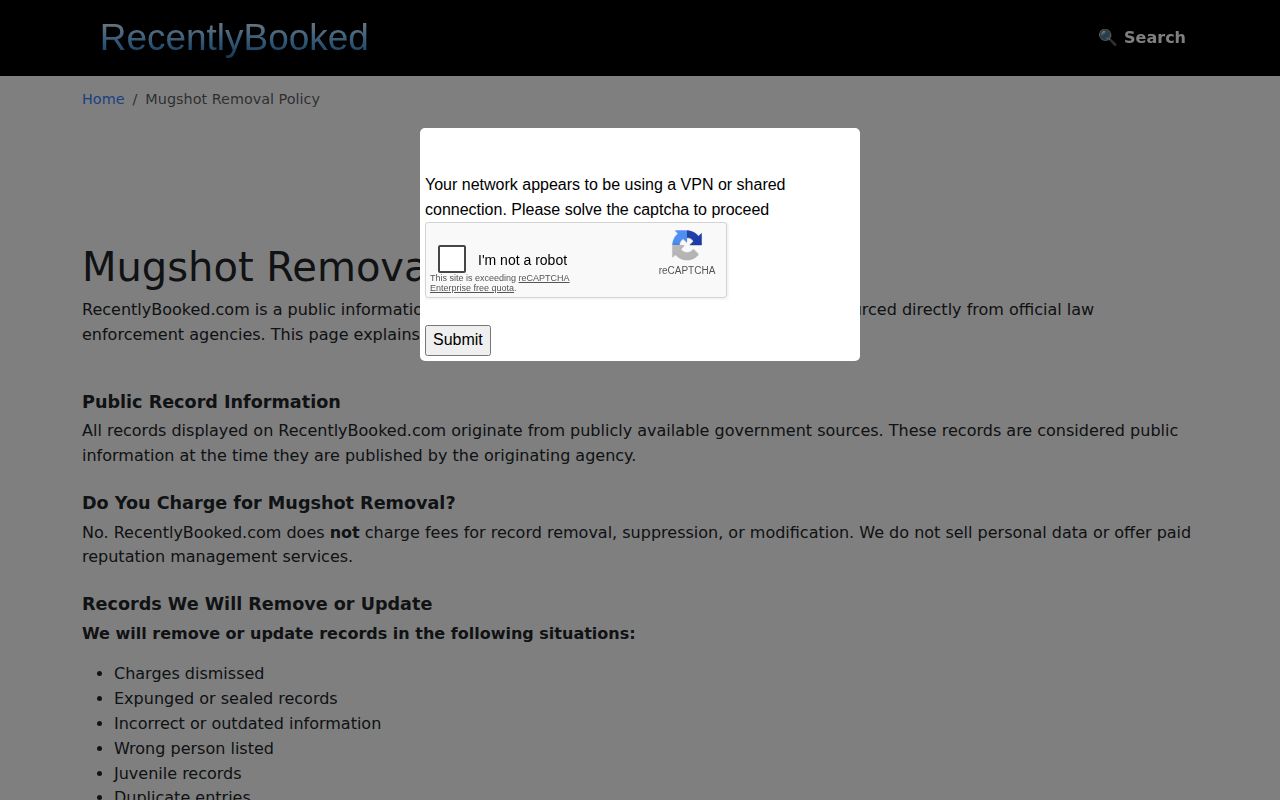
A private policy page is not an official record or court order. Its stated conditions can change at any time. Read the live policy before sending material.
Mugshots.zone's contact route is general. The site lists no detailed fee-free eligibility schedule or Nevada-specific promise. Arrests.org's contact page is available, though it publishes no clear, guaranteed free opt-out criteria. Do not assume a message removes a record with either service. Ask for the current process. Rely on a court or agency correction for the underlying legal status.
The Mugshots.com policy page lays out its own documentation-based maintenance route. That page shows a private process. It is not a state agency's rule.
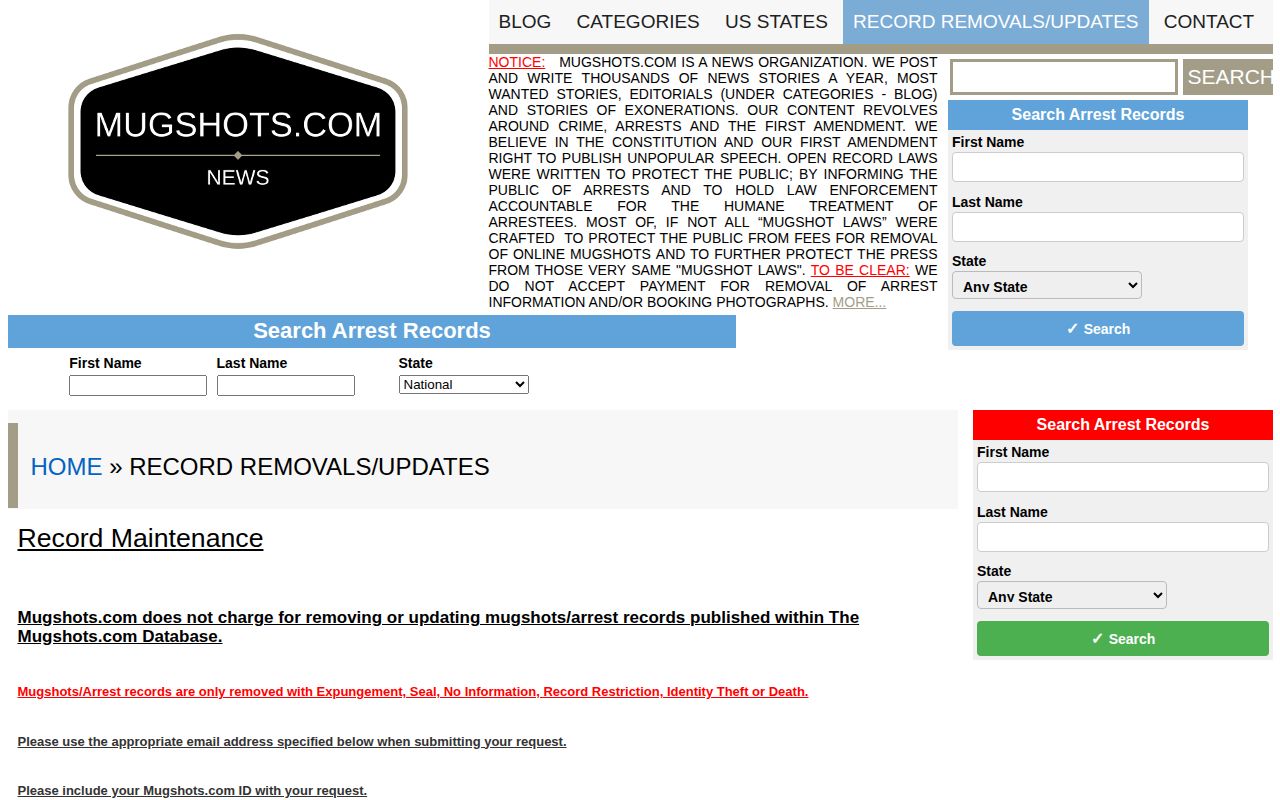
A private removal page only explains that publisher's own process. It shows no official Nevada mugshot, and it promises nothing about acceptance. Some services charge fees anyway. Be wary of anyone selling guaranteed erasure of government records. Also beware anyone promising removal from every search result. No Nevada statute governs what private companies may charge to take down ordinary booking photos. Paying a fee buys no court order, no agency correction, and no proof of sealing. A paid promise is just a promise. Start with the official legal path. Then use a publisher's free opt-out where one is offered.